Newsletter Subscribe
Enter your email address below and subscribe to our newsletter

 ByJohn A
Most hybrid workers don’t buy a chair. They inherit one. A hand-me-down from the spare room, a dining chair with a cushion on it, whatever was cheapest the week offices closed. And then it becomes permanent.
That’s the problem. Three days at a home desk, two at a shared one, and the body keeps score either way. The Herman Miller Mirra office chair keeps landing on shortlists in 2026 for a simple reason: it asks very little of you. Set it once, and it follows your spine through a long afternoon of video calls without a fuss (which is more than most chairs manage).
But is it the right pick against the Aeron or the Steelcase Leap? Honestly, that depends on your torso, your desk, and how you actually sit, not on whatever thread is trending on Reddit. Sort that out first — before you spend a dime — and the choice gets a lot easier.
A project manager works from the kitchen table Monday and Friday, then sits in a shared office Tuesday through Thursday. By October she’s had enough of the sore lower back. She wants one good chair at home, and she’s comparing the Mirra, the Aeron, and the Steelcase Leap.
Sound familiar? It’s the most common scenario in a consultation these days.
See also: Thomas Berkley Cleveland The Entrepreneur Behind CSM Collective
Hybrid schedules stopped feeling temporary.
Once people accept that, the dining chair and the cheap gaming seat have to go. The Herman Miller Mirra office chair fits that shift well because it’s a lighter, more affordable ergonomic option with a mesh-style back and plenty of adjustable parts. It also looks less clinical in a spare room (a real plus on video calls).
Buying refurbished or pre-owned from a seller offering an authentic, certified chair with a warranty is a sensible route too.
Not much, and that’s the honest answer.
The core idea stayed put. The differences are small but real:
Pick a fully loaded unit, and you get the tilt, arm, and lumbar controls you’ll actually want.
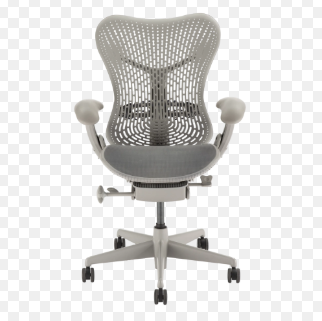
Your lower back needs a curve to lean into, and this chair gives you one. The Herman Miller Mirra Office Chair uses a Butterfly Back, a two-wing mesh shell that flexes with your shoulder blades and spine instead of locking you into one shape.
The Mirra 1 relies on its flexing frame and an optional height-adjustable lumbar pad. Mirra 2 changed the back. It uses a single-piece triflex mesh that holds firmer at the base, plus a lumbar control you can nudge up or down. Sit tall. Slide the pad until it sits just above your belt line.
Start with seat depth, since it’s the setting most people skip. Leave about two fingers of space between the seat edge and the back of your knees. Then set tilt tension so the chair follows you through a recline without dumping you backward (a 150-pound user and a 220-pound user need very different dials). Check these in order:
The Mirra 1 has no built-in headrest. Some buyers hunt for a fully loaded unit with an aftermarket add-on, which is worth confirming before you buy refurbished. There’s no footrest either. If your desk is high, a separate footrest does the job.
Which chair actually survives eight hours a day, five days a week, in a spare bedroom? The Herman Miller Mirra office chair, the Aeron, and the Embody all claim the title. Each earns it for a different body.
The Mirra’s TriFlex back flexes like a sling and feels softer. The Aeron’s 8Z Pellicle mesh is firmer and runs cooler. Runs warm? Pick the Aeron. The Mirra also ships in one size, while the Aeron comes in A, B, and C, so tall or heavier sitters (over 200 lbs) fit better in a Size C.
The Leap sits between them. Its LiveBack flexes with the spine, and the seat slides up to 3 inches for thigh support. Short legs? It’s a strong contender. But skip the leather version if you’re warm-blooded.
Forum threads crown whatever chair the poster owns. Useless, mostly. Your torso length, hip width, and desk height decide the winner.
Buying refurbished or pre-owned is a smart move here, as long as the chair is authentic, certified, and carries a real warranty. Sit in each for a week before you commit.
Roughly 8 out of 10 corporate chairs get swapped out while the frame, base, and mechanism still have years left. That’s why a pre-owned Herman Miller Mirra office chair can be a smart buy for a permanent home setup.
Fully loaded means every adjustment is present. Look for these:
A Mirra 1 often lacks a few of those.
It also has no headrest option worth chasing, so skip any listing that promises one.
Start with the label. Authentic chairs carry a serial—date tag under the seat. Ask for a clear photo of it.
The Mirra supports up to about 300 pounds. Well-kept units commonly last 10 to 12 years. Walk away if the back sags, the seat is cracked, or the seller won’t show the tag. Pain after a week? Don’t blame yourself. It’s likely the wrong setup, or the wrong chair.
A chair has to earn its spot on a desk you’ll use three days a week for the next decade. The Herman Miller Mirra office chair does that for most hybrid workers because it adjusts without fuss — holds a neutral spine when your laptop day turns into a six-hour call marathon. It isn’t flawless. Taller sitters may miss the Aeron’s size options, and the Leap still wins on fine-tuned lumbar feel for some bodies.
But the fit matters more than the badge. A pre-owned or open-box Mirra with a certified refurbishment and a real warranty can match a new one, provided the serial tags, mechanism, and mesh check out. Skip any listing that can’t prove that.
So here’s the next step. Measure your seat-to-floor height and thigh length this week, then sit in a Mirra, an Aeron, and a Leap for at least 20 minutes each if you can find a showroom or a generous return window. Write down where your lower back and thighs feel pressure. Let those notes pick the chair, not the forum thread.