Newsletter Subscribe
Enter your email address below and subscribe to our newsletter

 ByJohn A
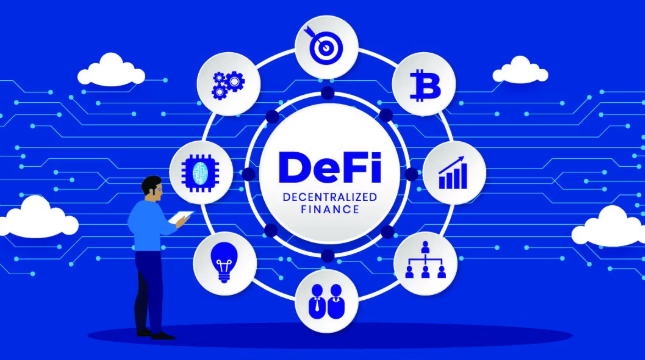
DeFi, or decentralized finance, uses programmable smart contracts to replace intermediaries in financial services. It relies on oracles for price data, automated market makers for exchanges, and cross-chain protocols for interoperability. Users access lending, stablecoins, yield strategies, and governance through open, incentive-driven protocols. Regulation, risk management, and transparent governance shape adoption. The system promises efficiency and resilience, but inherent risks demand careful evaluation, continually monitored collateral, and clear exit plans, leaving questions about real-world stability and long-term viability unresolved.
DeFi, or decentralized finance, refers to financial services built on blockchain networks that operate without centralized intermediaries. It is examined through risk metrics, highlighting uncertainties and potential loss.
The regulatory landscape shapes adoption, enforcement, and compliance requirements.
Governance models determine decision authority across protocols.
Cross chain compatibility affects interoperability, while openness and transparency drive accountability for users seeking freedom within emergent financial systems.
See also: voiceyell
DeFi systems operate through a stack of interconnected components and protocols that collectively enable financial services without traditional intermediaries. Core layers include programmable smart contracts, oracles, and decentralized exchange mechanisms that automate trustless interactions.
In practice, decentralized lending and stablecoins mechanics illustrate how collateral, liquidation, and price feeds sustain liquidity, risk management, and price stability within permissionless markets.
Governance and yield generation form the dual axes of DeFi’s practical utility: how protocols decide policy and how participants earn returns.
In this landscape, governance mechanics enable decentralized decision making, while yield strategies translate capital into incentives.
Use cases span liquidity provisioning, staking, and programmable incentives, illustrating how permissionless finance aligns stakeholder interests with transparent rules and measurable, verifiable outcomes.
Risks and tradeoffs are inherent in decentralized finance, demanding a disciplined approach to evaluation and risk management. Defi navigation emphasizes measured due diligence, diversified exposure, and transparent tooling. Prospective participants should prioritize risks mitigation, understand protocol incentives, and verify collateral management practices.
Practical steps include setting limits, monitoring liquidity, and rehearsing exit strategies to preserve autonomy while minimizing reliance on centralized intermediaries.
Regulation can balance growth and risk; regulators might deploy Regulatory sandboxes to test frameworks without stifling innovation, while offering Innovation incentives that reward compliant, transparent projects, enabling responsible DeFi development and broader participation across markets.
Verification audits and bug bounty programs are used to assess smart-contract security; auditors identify vulnerabilities, while researchers disclose flaws through incentives, enabling developers to patch issues before exploitation, thus empowering users with transparency and ongoing security improvements.
What if a DeFi platform fails? Investigators assess exposures, liabilities, and user losses; risk mitigation strategies, contingency plans, and custodian remedies are scrutinized. The scenario outlines countermeasures, failure modes, and governance responses to protect affected participants and markets.
Insurance options exist but gaps persist; DeFi losses may not be fully covered. The report notes insurance gaps and emphasizes rigorous risk assessment, urging independent audits and clear disclosures for audiences seeking freedom from opaque platforms.
DeFi cannot fully replace traditional banks at present. It lacks universal regulation and consumer protections; ongoing DeFi regulation and rigorous smart contract audits are essential for broader adoption, transparency, and trusted financial freedom within decentralized ecosystems.
DeFi unfolds like a ledger rewritten in real time, a trustedless ecosystem where code enforces agreements as reliably as a courtroom. Its promise is auditable openness: global access, transparent incentives, and programmable contracts that remix risk into opportunity. Yet opacity lingers in complex protocols and governance gaps, demanding due diligence. As regulators sharpen their gaze, users must chart exits, monitor collateral, and verify oracles. In this evolving frontier, clarity and caution are the best compass for navigating the stormy seas of decentralization.